
Tree Frog, Hyla Laurenti, 1768
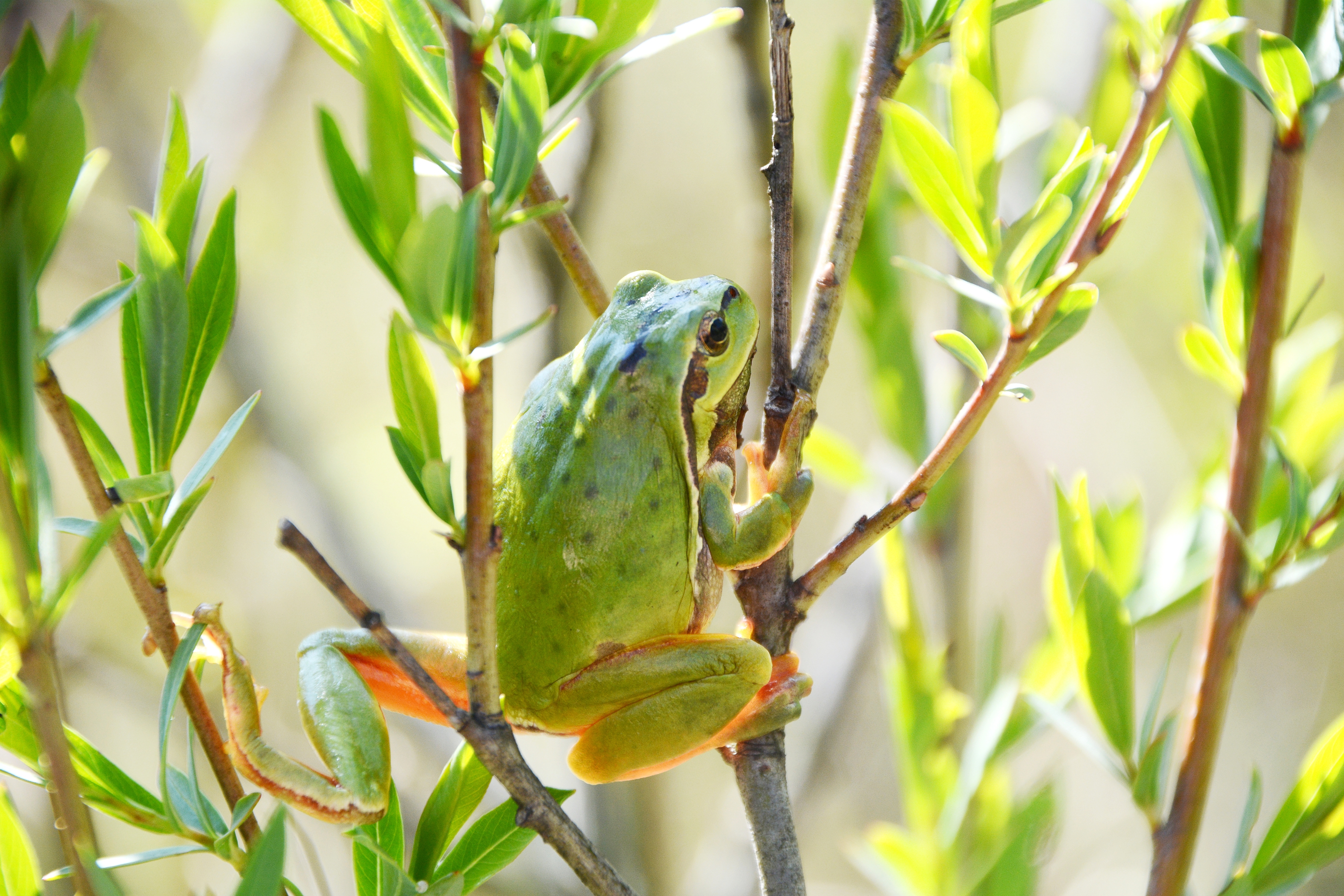
The following photos may depict two morphologically and ecologically very similar species: the European tree frog (Hyla arborea) or the Eastern tree frog (Hyla orientalis). Until recently, they were considered a single species. These amphibians inhabit large areas of Europe, from Portugal to the far reaches of the continent and western Asia (Azerbaijan), reaching as far north as Denmark.


Species characteristics
Tree frogs are small amphibians, with a body length ranging from 3 to 5 cm. They have long limbs with adhesive pads on their toes. Their skin is thin, delicate, and smooth. The basic body color is green, but it may change depending on external stimuli as well as the physiological and emotional state of the individual. A characteristic feature of tree frogs is a dark lateral stripe running along the sides of the body.
These are thermophilic amphibians that live on land outside the breeding season. They lead a predominantly arboreal lifestyle and, thanks to their camouflage coloration, often remain almost motionless. Their adhesive toe pads allow them to cling effectively to vertical surfaces. Tree frogs inhabit mainly lowlands and uplands, avoiding open and unvegetated areas. They breed in natural water bodies with abundant vegetation, especially those surrounded by shrubs, such as ponds.
In Poland, tree frogs are under strict species protection.