
Tempel Synagogue (Progressive Synagogue)
Tempel Synagogue (Progressive Synagogue) is a historic Reform synagogue located in Kraków, in the Kazimierz district, at 24 Miodowa Street. It is currently one of four active synagogues in the city; however, services are held there only occasionally.
History of the Synagogue
The Tempel Synagogue in Kraków is one of the most important monuments of the city’s Jewish heritage. Its creation was the result of long and determined efforts by the progressive Jewish community, who wished to establish a place of worship reflecting the modern religious and social ideas of the 19th century. The construction of the synagogue began after as many as 17 years of preparations, and the building itself was erected between 1860 and 1862 according to the design of architect Ignacy Hercok. The initiative came from the Association of Progressive Israelites and the Religious-Civilisation Society. The synagogue was attended mainly by Reform Jews who sought cultural and social integration with the Polish nation. Services followed the reformed 19th-century liturgy, and sermons were delivered in Polish and German. It was a modern place for its time — equipped with an organ and a choir in which women also sang during the interwar period.
In the following years, the building was expanded and remodelled several times. As early as 1868, the synagogue was enlarged by Teofil Lamyrski, followed by further works in 1883 carried out by J. Ertl. The most significant changes were introduced between 1893 and 1894, when Beniamin Torbe, together with Fabian Hochstim, gave the temple a new appearance. At that time, a vestibule and a new façade were added to the western side, as well as a three-sided apse on the eastern side. The interior received distinctive Moorish-style decorations, emphasising the oriental character typical of synagogue architecture.
The final architectural form of the building was established in 1924, when, according to the plans of Ferdynand Liebling and Jozue Oberleder, side aisles were added and the layout of the eastern section was modified. Since then, the synagogue has retained the form that can still be admired today. During the Second World War, German occupiers devastated the interior of the building, converting it into a warehouse and turning one of the aisles into a stable for horses. After the war, the synagogue once again became a place of prayer — used by both progressive and Orthodox Jews. In 1947, a mikveh, or ritual bath, was established in its northern section. Regular services continued until 1968; in the 1970s, they were held only occasionally, and after the death of the last cantor, Abraham Lesman, in 1985, the synagogue was closed and gradually began to deteriorate.
A new chapter in the history of the building began in the early 1990s, when the World Monuments Fund included the synagogue on the list of important Jewish heritage monuments in Central and Eastern Europe. In 1994, a comprehensive restoration began, and in 2000 the full conservation of the synagogue was completed, restoring its former splendour.
Today, the Tempel Synagogue remains active, although services are held only a few times a year — mainly during the Jewish Culture Festival and major religious holidays. The building also serves as an important place of memory and culture, reminding visitors of the rich history of the Jewish community in Kraków.

Architecture
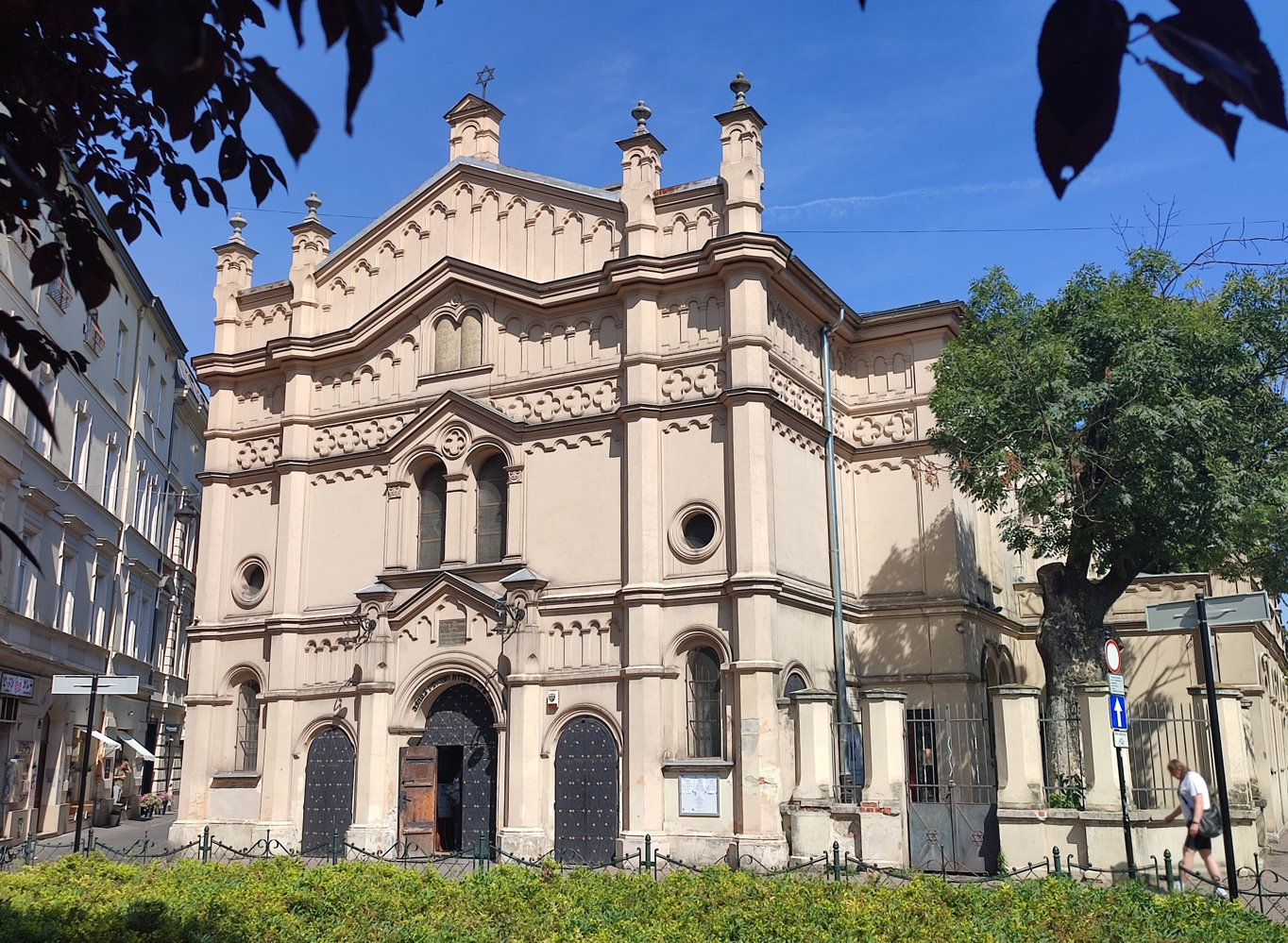
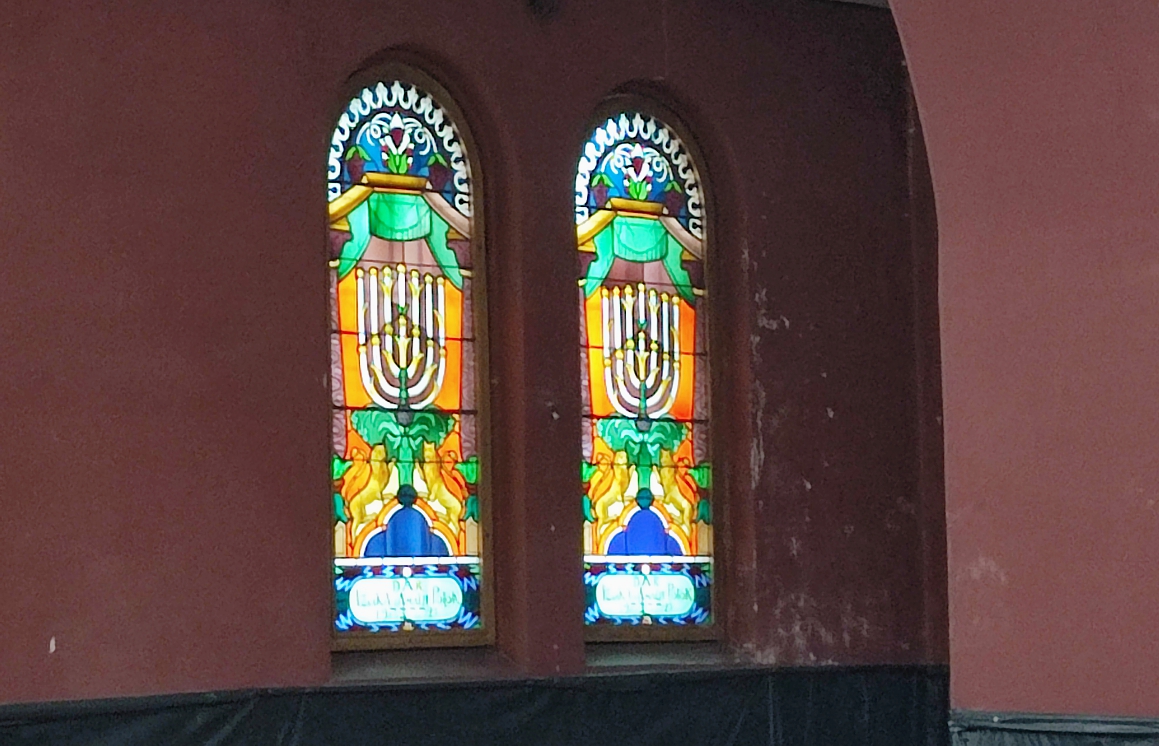
The Tempel Synagogue in Kraków is a brick building constructed on a rectangular plan, designed in the Moorish Revival and Neo-Renaissance style, combining elements of oriental and Renaissance architecture. The façade is distinguished by its rich decorations and characteristic twin-arched windows, which contain colourful stained-glass panels dating from the late 19th and early 20th centuries, funded by members of the congregation.
Above the main entrance, beneath a triangular pediment, are the Tablets of the Ten Commandments made of black marble, along with a quotation from Psalm 100:4: “Enter His gates with thanksgiving and His courts with praise.”
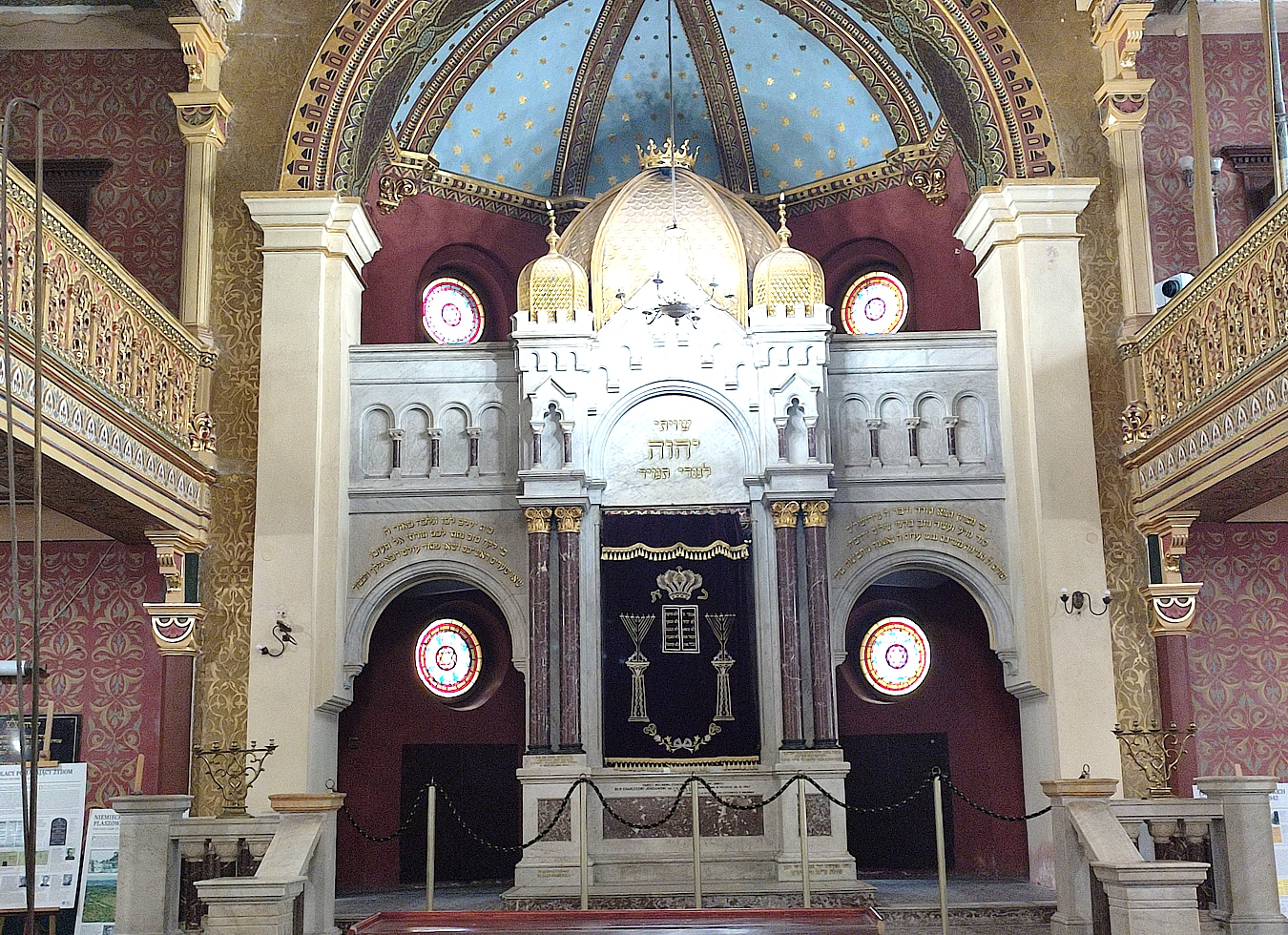
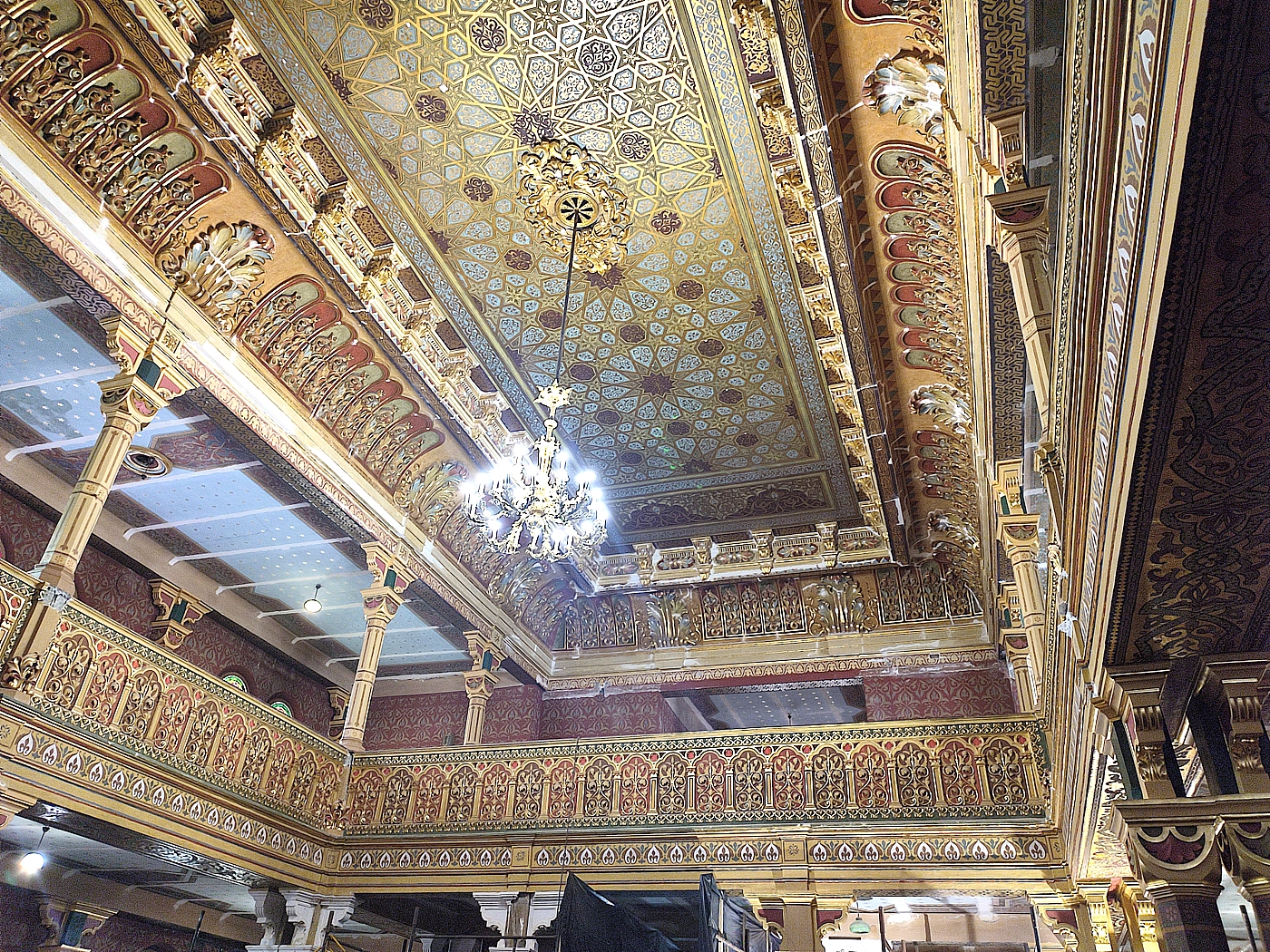
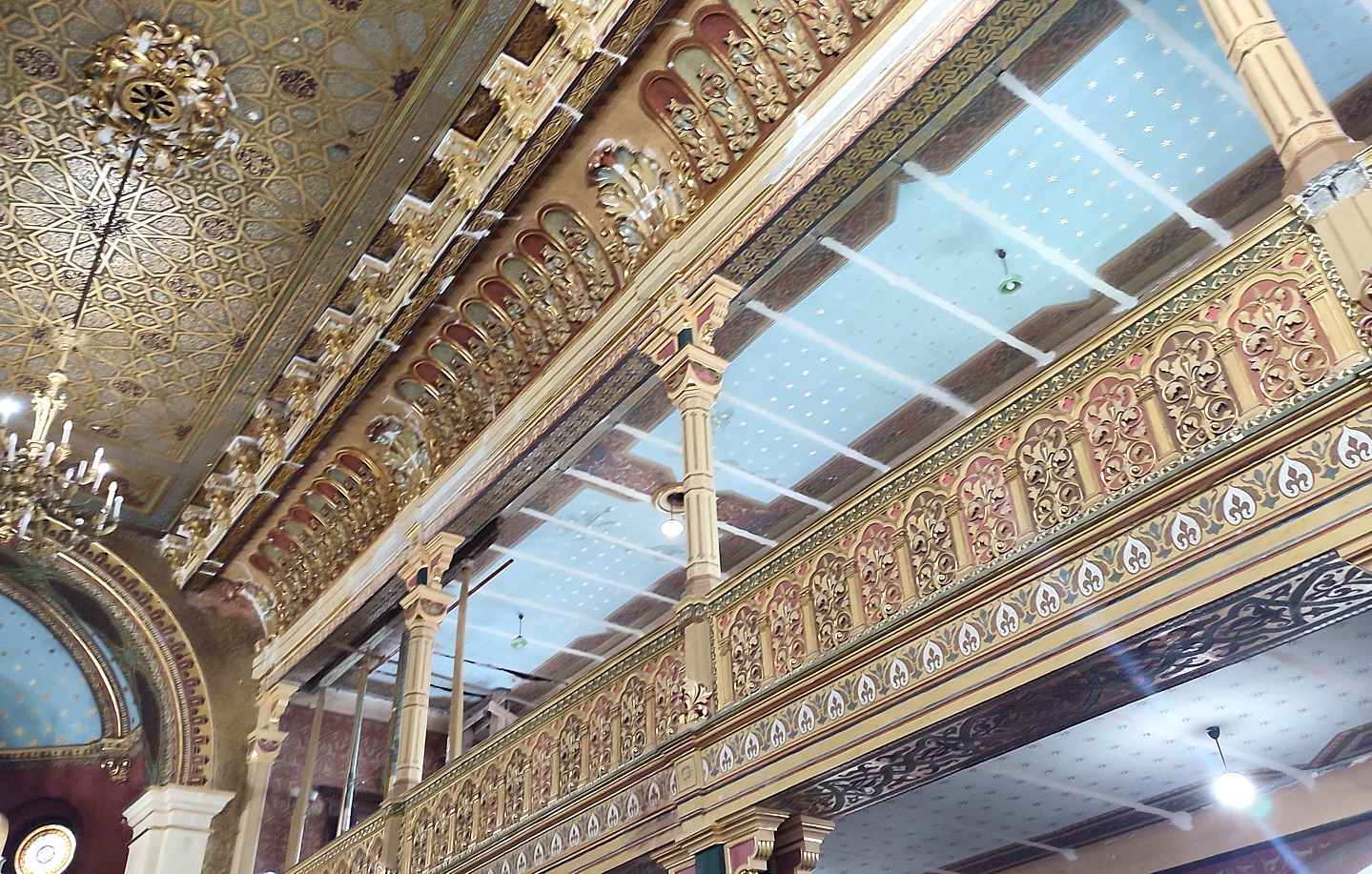
The interior of the main prayer hall is decorated with rich stucco work and Moorish-style ornaments. The women’s galleries are supported by decorative iron columns, and a bimah is located in the centre of the hall. Particular attention is drawn to the ceiling decorations and balustrades featuring plant motifs inspired by Islamic art. In the eastern part of the synagogue stands the monumental Aron ha-Kodesh (Torah Ark), made of white Carrara marble. It is placed on a raised platform and crowned with a golden semi-dome and decorative turrets. It stands in front of a semi-circular apse decorated with a motif of a starry sky. A unique feature of the synagogue’s interior is the presence of 43 colourful stained-glass windows with geometric and floral motifs. These are the only surviving synagogue stained-glass windows in Poland, making them an exceptionally valuable element of cultural heritage.
Interesting Facts
The Tempel Synagogue is not only a place of worship but also an important centre of Jewish culture. Thanks to its excellent acoustics and large interior capable of accommodating several hundred people, the building has become a venue for numerous concerts and cultural events.
The synagogue plays a particularly important role during the Jewish Culture Festival, when concerts, meetings, and artistic events attracting visitors from around the world take place inside.
Over the years, many renowned cantors and musicians have performed here, including Benzion Miller, Joseph Malovany, and Yitzhak Meir Helfgot. The synagogue has also hosted various musical ensembles performing Jewish music, ranging from traditional klezmer to modern styles.
One of the most notable performers associated with the synagogue was Leopold Kozłowski-Kleinman, often referred to as the “last klezmer of Galicia,” who regularly performed here with invited artists.