
Old Synagogue in Kraków
The Old Synagogue in Kraków is a historic synagogue located in the Kazimierz district at 24 Szeroka Street. It is one of the oldest preserved synagogues in Poland and one of the most valuable examples of Jewish religious architecture in Europe. Until 1939, it served as the central synagogue of the Kraków Jewish community.
History of the Synagogue
The synagogue was probably built in the second half of the 15th century by Czech Jews (most commonly dated to 1407 or 1492). It was built as a Gothic two-aisled prayer hall intended for men. Its eastern wall adjoined the city defensive walls, forming part of the medieval fortifications. Similar synagogues existed in only a few European cities, including Worms, Regensburg and Prague.
After a fire in 1557, the building was rebuilt by the Florentine architect Mateo Gucci, who gave it a Renaissance character. In the following centuries, it was repeatedly damaged by fires and subsequently rebuilt.
In 1794, Tadeusz Kościuszko delivered a speech here, calling upon Jews to fight for the freedom of their shared homeland.
During the Second World War, the synagogue was devastated by the Germans. Restoration began in 1956, restoring its Gothic-Renaissance appearance. Between 1970 and 1972, the high wall surrounding the synagogue on the northern and western sides was dismantled and wide terrace steps were added.




Architecture of the Synagogue
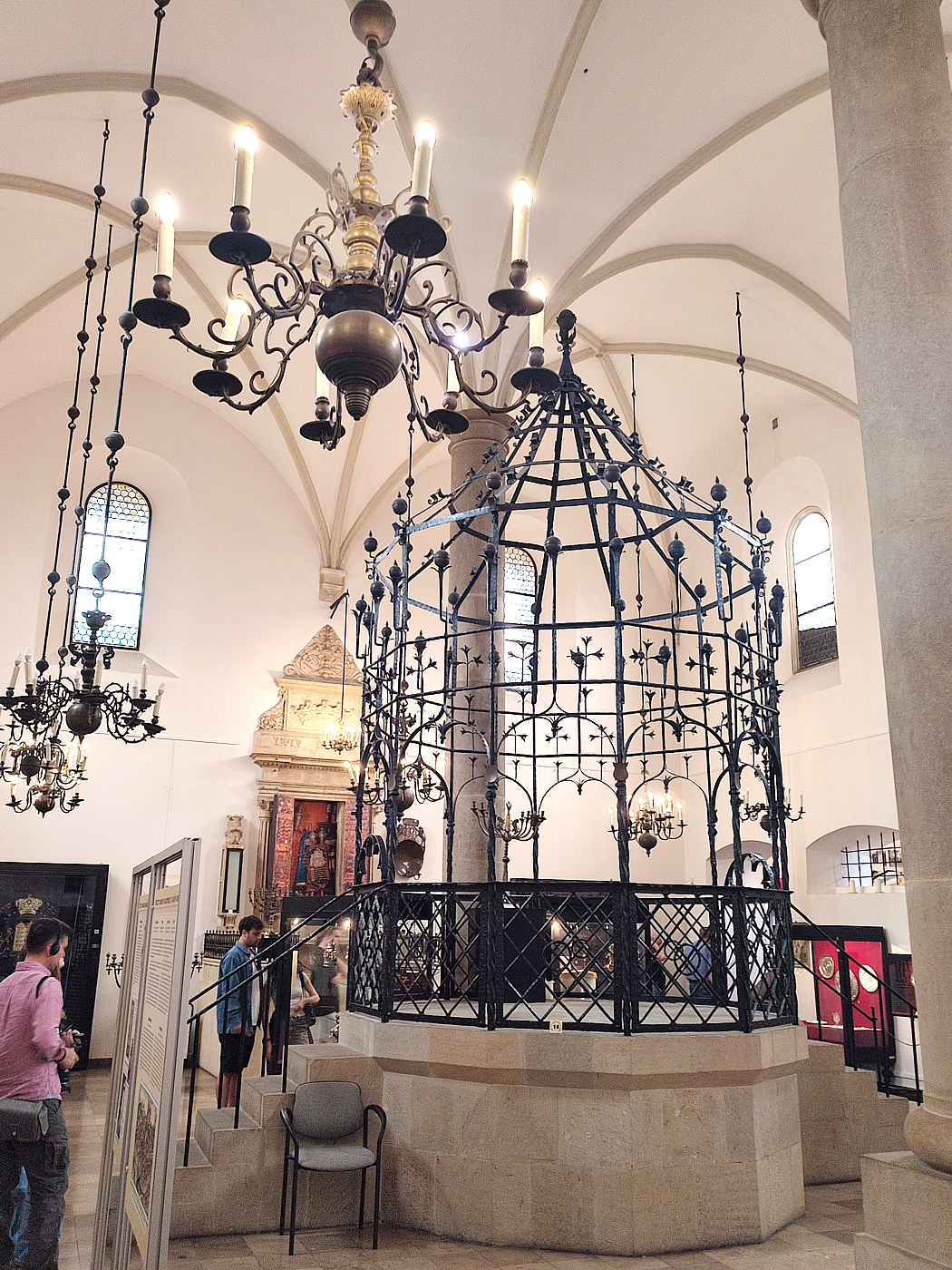
Today, the synagogue is a Gothic-Renaissance rectangular, two-aisled hall with a ribbed cross vault supported by two slender Tuscan columns. Former women’s galleries adjoin the building from the north and south. The roof of the main body is concealed by a high arcaded attic with semi-circular niches and corner pinnacles. In the north-eastern corner, a fragment of the former city wall has been preserved.
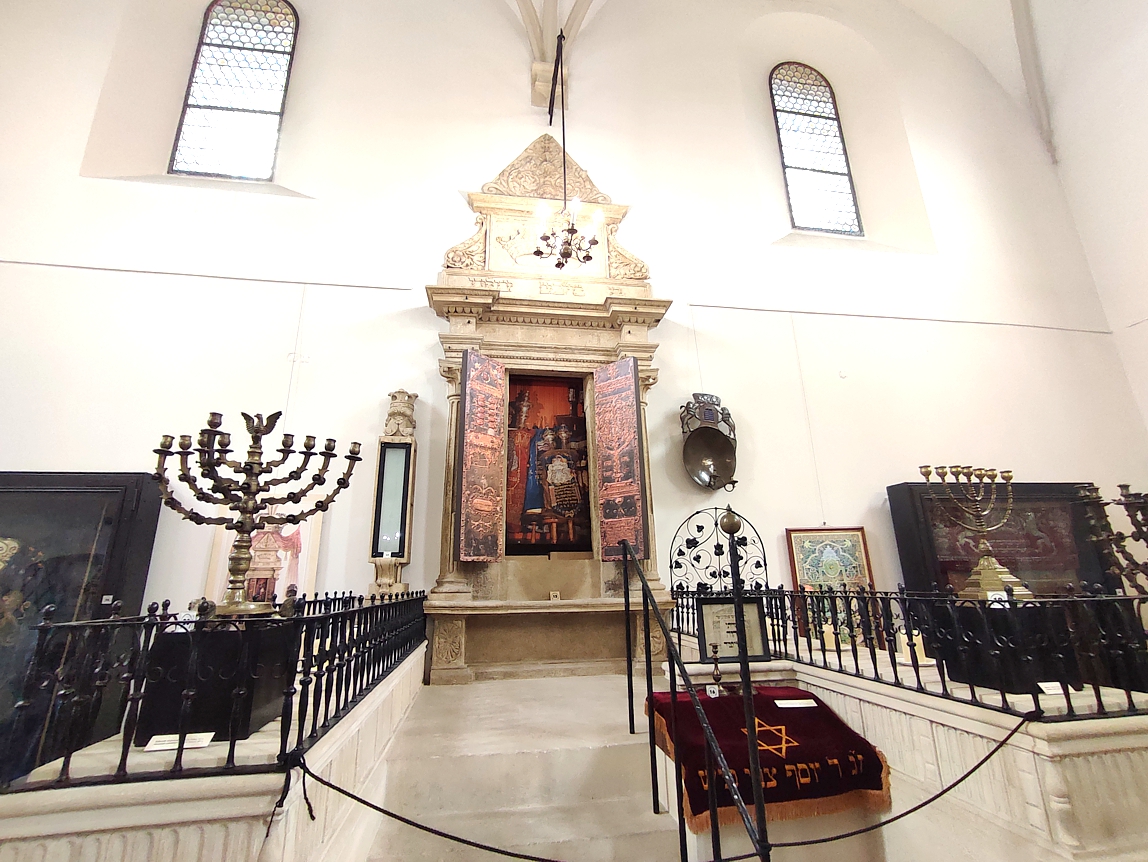
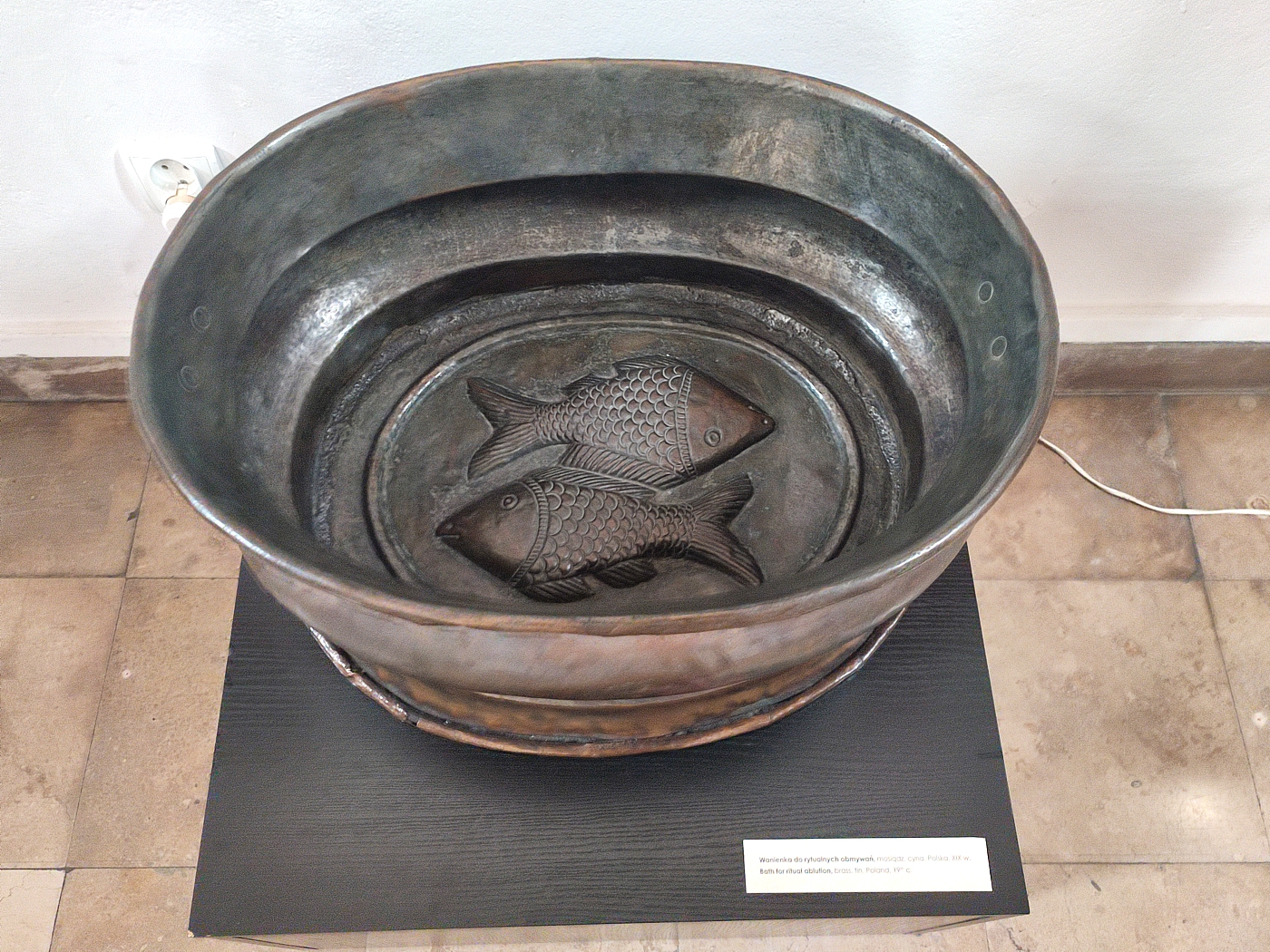
The interior is entered through a Renaissance portal bearing a Hebrew inscription: “This is the gate of the Lord; the righteous shall enter through it.” In the vestibule there is a stone basin for ritual hand washing. At the centre of the hall stands a reconstructed iron bimah in the form of a canopy, and against the eastern wall is a late-Renaissance Aron ha-kodesh with a quotation from the Book of Proverbs.
Fragments of polychrome decoration, probably dating from the mid-17th century, have also survived.
Branch of the Museum of Kraków – History and Culture of the Jews
Since 1958, the building has housed the Judaica Collection – a branch of the Museum of Kraków. The exhibition presents artefacts related to the history and culture of Kraków’s Jewish community. Among the most valuable exhibits are:
- a 1770 lambrequin embroidered with a Torah crown
- silver rimonim from the interwar period
- a Torah breastplate (tas) from around 1800
- a yad from 1798
- a 19th-century Hanukkah lamp from Lviv
- a Seder plate depicting the Exodus (c. 1806)
An important part of the collection includes traditional Jewish garments and iconography of historic Kazimierz – paintings, prints and photographs documenting the life of the community.
Interesting Facts
According to legend, permission to build the synagogue was granted by King Casimir III the Great, who allegedly donated two silver swords intended to be melted down into candlesticks. Out of respect, they were instead hung in the vestibule.
The synagogue is also associated with a unique tradition during Simchat Torah. During the customary seven joyful processions with the Torah, the fourth procession was interrupted halfway and replaced with prayers. The custom commemorated a tragic Tatar attack on the synagogue during the festival, when worshippers were killed.