
Corpus Christi Basilica in Kraków – Conventual Church of the Canons Regular of the Lateran
The Corpus Christi Basilica in Kraków is a historic Roman Catholic church located in the Kazimierz district at 26 Bożego Ciała Street. It serves as the conventual church of the Canons Regular of the Lateran and is a triple sanctuary dedicated to the Blessed Virgin Mary – Mother of the Saviour, Saint Stanislaus Kazimierczyk and the Eucharist.
History of the Church
The Corpus Christi Basilica in Kraków was founded around 1340 by King Casimir III the Great. Construction began in the 1340s with the chancel, but after 1348 the works were halted, probably due to the plague. Building resumed in 1369. The church was constructed by members of the Cypser family, one of the most important medieval builder families in Kraków. The chancel was consecrated in 1401, and work on the nave continued until 1405. In the same year, Władysław II Jagiełło brought the Canons Regular from Kłodzko, for whom a monastery was built and connected to the church by an arcaded passage. The façade was completed around 1500, and the tower was added between 1566 and 1582. In 2005, by decision of Pope John Paul II, the church was granted the title of minor basilica.
In the Middle Ages, a Passion cemetery with representations of Gethsemane and Golgotha existed next to the church; its remains were removed between 1938 and 1940. Saint Stanislaus Kazimierczyk is buried in the church.



Architecture of the Church
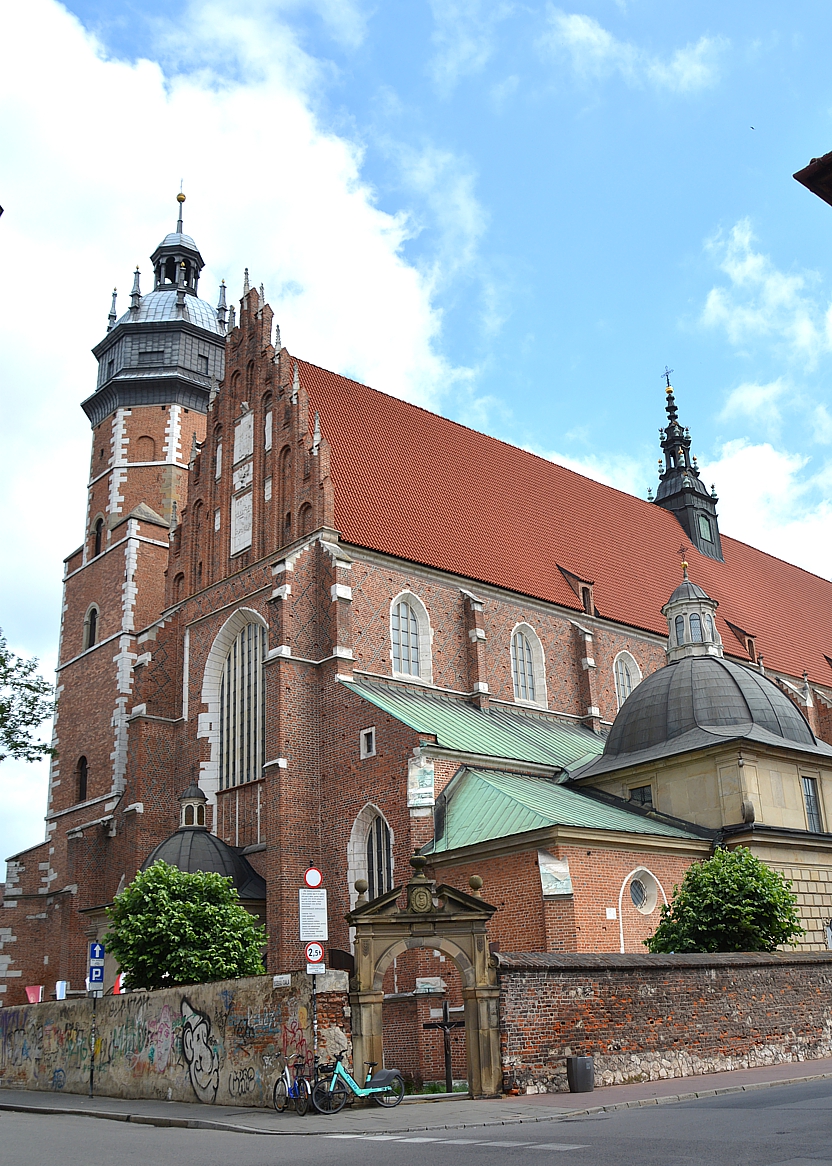
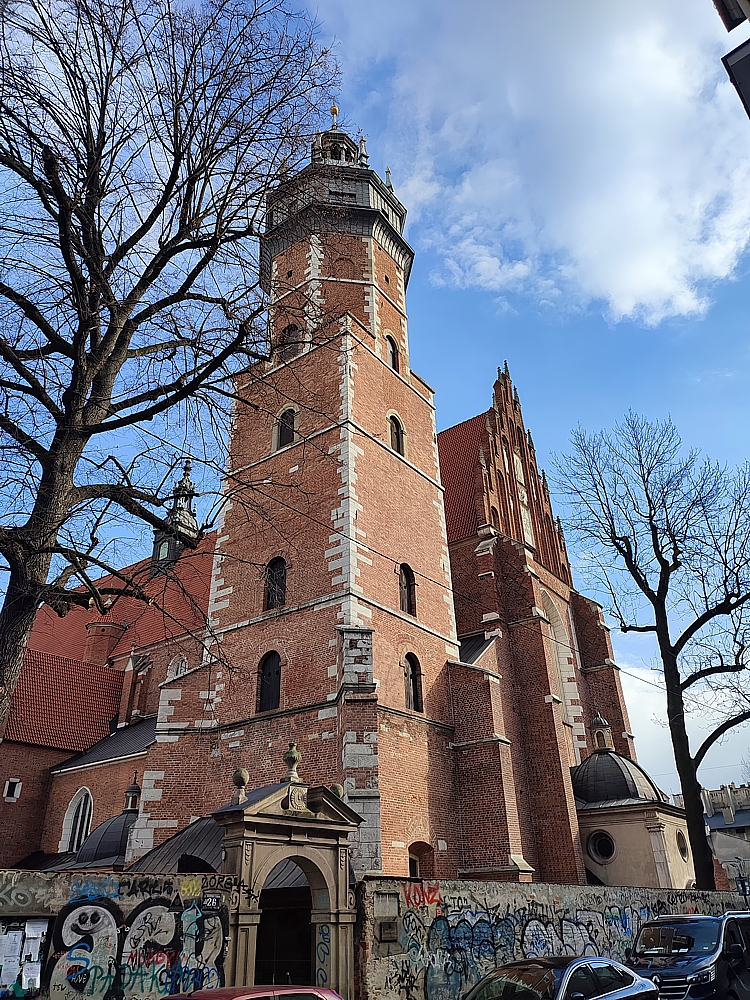
The Corpus Christi Basilica in Kraków is an east-oriented, three-aisled basilica without a transept, with a free-standing tower and a roof turret.
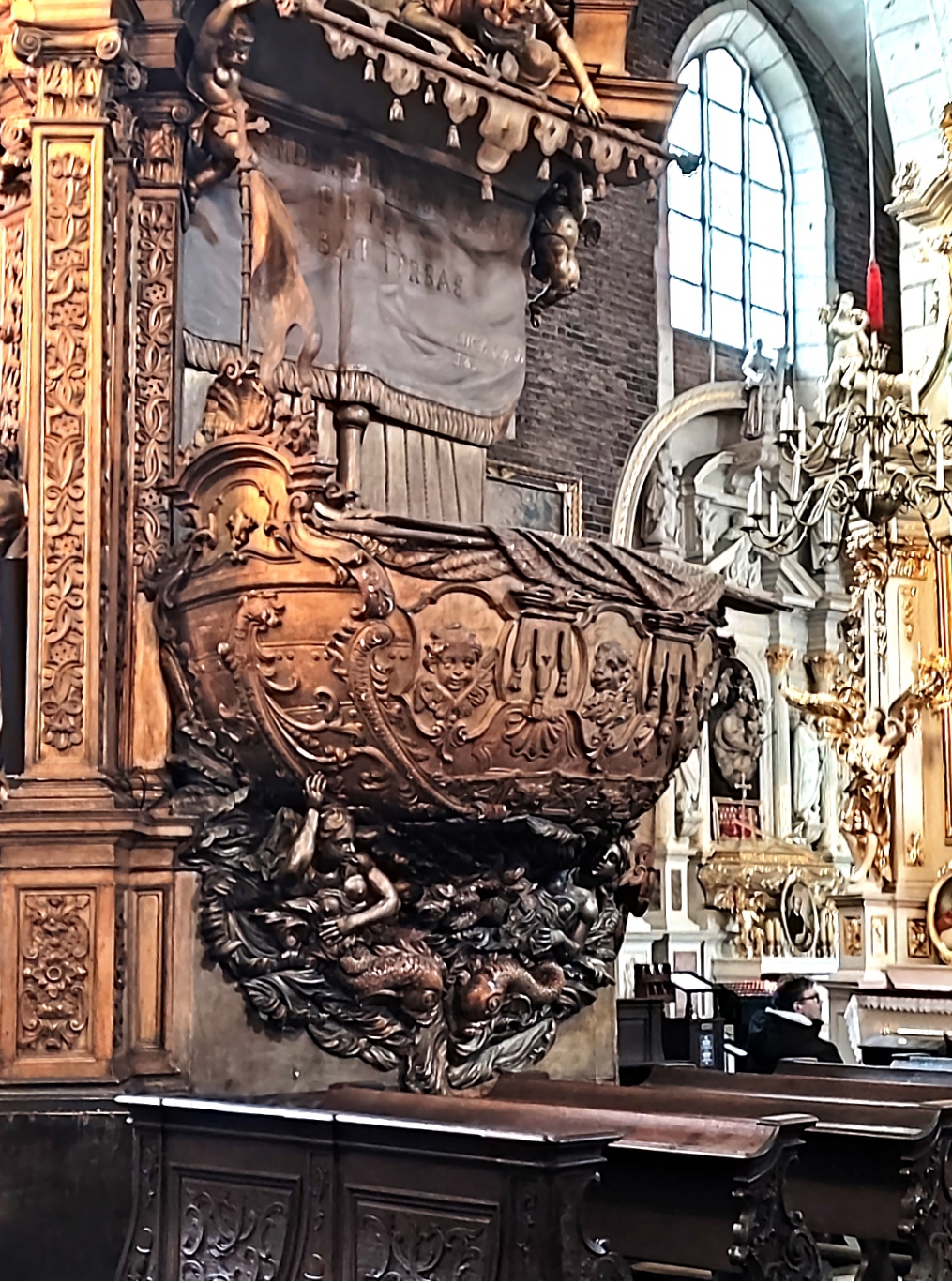
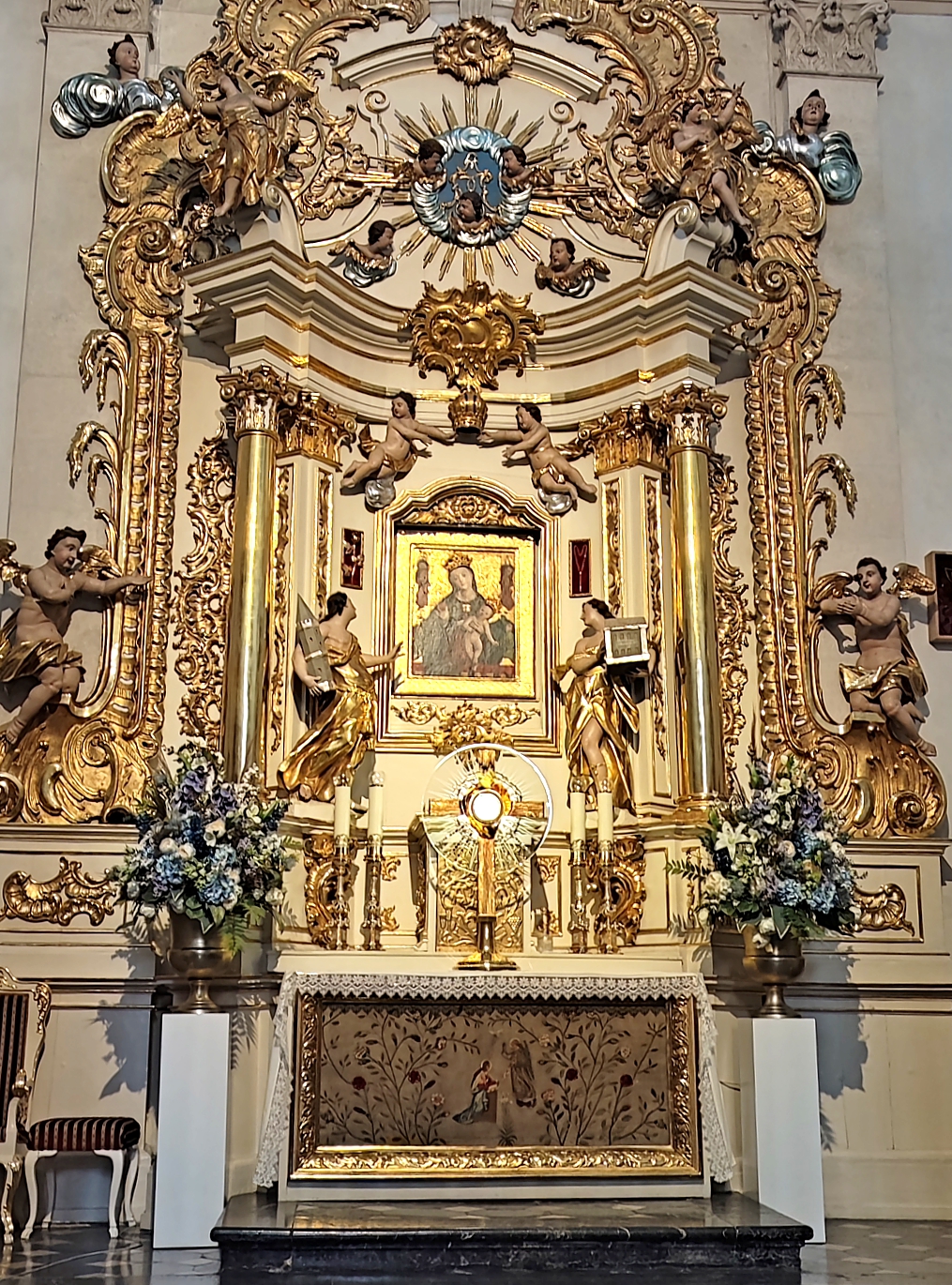
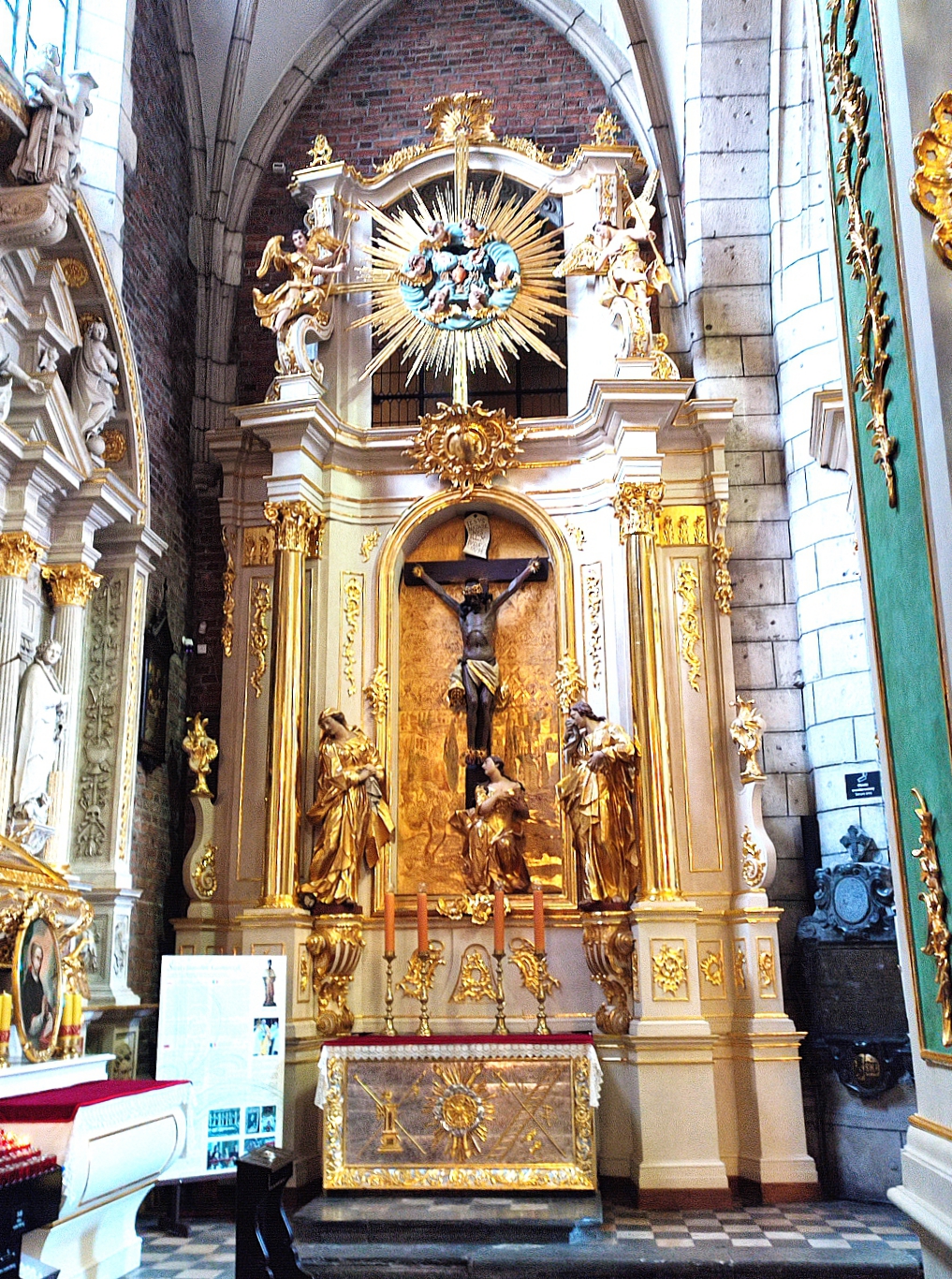
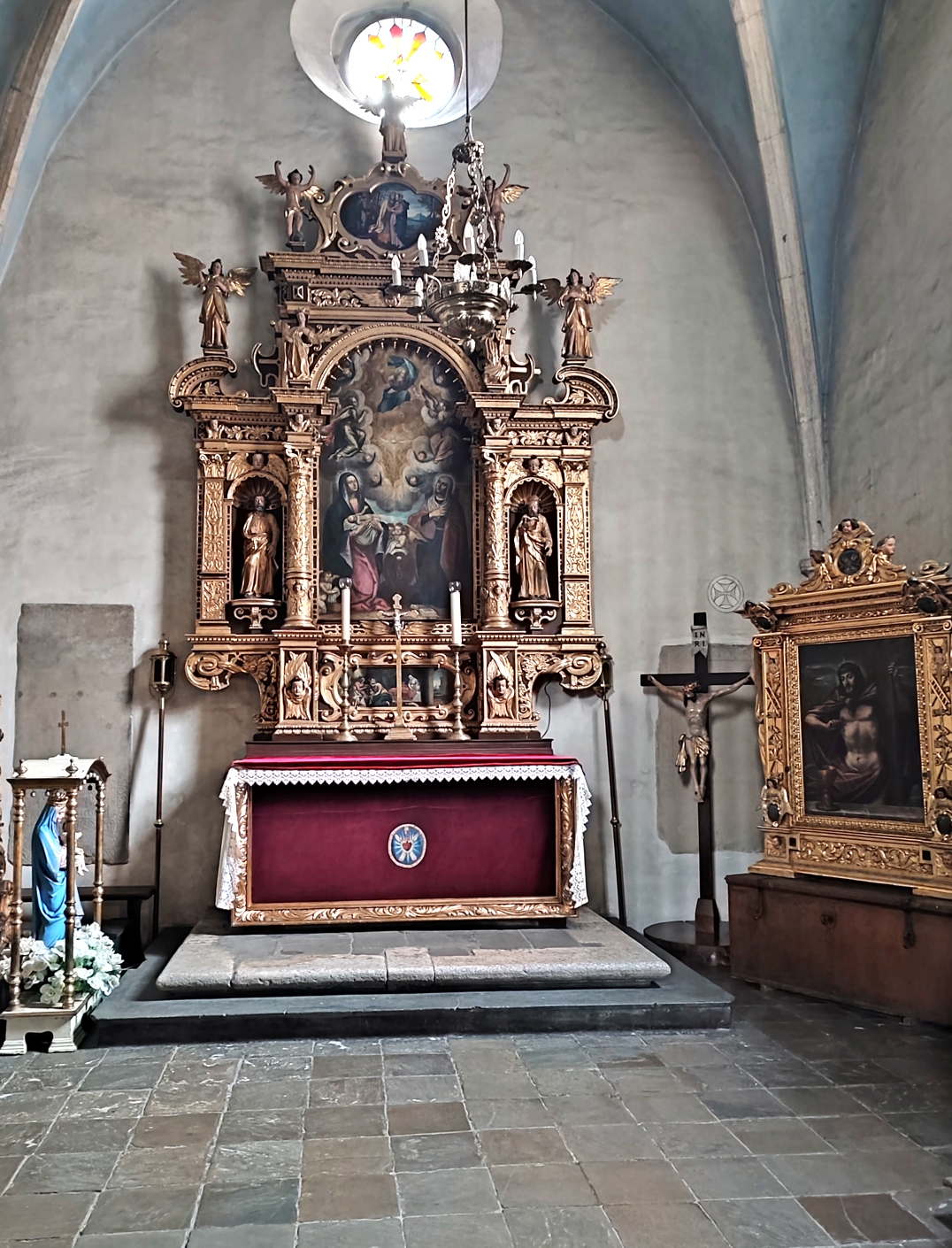
The main altar is two-tiered, dating from 1634, 21 metres high, and represents late Renaissance style with Italian and Netherlandish elements. At its centre is the painting “Adoration of the Shepherds” by Tomasz Dolabella. The structure is richly decorated with carved prophets, ornamental motifs and gilding, and is complemented by a 17th-century Baroque tabernacle. In the nave stands a late-Baroque boat-shaped pulpit (18th century). Near the chancel arch are two altars with paintings of Christ and the Madonna by Łukasz Porębski (1619). The chancel contains Mannerist choir stalls (1624–1632) and a richly gilded altar with the Nativity painted by Tomasz Dolabella. A statue of Saint Stanislaus Kazimierczyk stands on the right.
The northern aisle houses the confession shrine of Saint Stanislaus Kazimierczyk. The southern aisle connects to the Chapel of St Anne and the Chapel of the Annunciation, which contains a 15th-century bronze baptismal font and a 16th-century painting of the Madonna. The basilica has the largest organ in Kraków – 83 stops and nearly 6,000 pipes, consisting of a main organ in the gallery and a smaller one in the chancel. The history of the organ dates back to the 14th century.
Saint Stanislaus Kazimierczyk
Stanislaus Kazimierczyk (1433–1489), born Stanislaus Sołtys, was a Canon Regular of the Lateran, preacher and pastor associated with Corpus Christi Church in Kraków. He studied at the Kraków Academy and, after his priestly ordination in 1456, served as preacher, prior and confessor. He was known for his devotion to the Eucharist, care for the poor and fidelity to the Rule of Saint Augustine. Already during his lifetime he was regarded as a holy man. He died on 3 May 1489 and was buried in the church, where his tomb became a place of pilgrimage. He was beatified in 1993 by Pope John Paul II and canonised in 2010 by Pope Benedict XVI. His liturgical feast is celebrated on 3 May (and also 5 May in Poland).
Interesting Facts
A medieval legend is associated with the Corpus Christi Church. During the octave of Corpus Christi, a gilded monstrance containing the Blessed Sacrament was stolen from the Church of All Saints in Kraków. When the thieves discovered it was made of copper, they abandoned it in marshland near the village of Bawół. Mysterious lights reportedly appeared above the marsh, and the monstrance was found during a solemn procession. King Casimir II the Just is said to have vowed to build a church on the site in honour of Corpus Christi.