
Goldenrod crab spider, Misumena vatia (Clerck, 1757)
Goldenrod crab spider (Misumena vatia) is a widely distributed spider. It occurs in Europe, from the Mediterranean regions to Scandinavia, as well as in Asia and North America. It is most commonly found in open habitats, such as agricultural fields, meadows, marshes, gardens, and forest edges. Adults are mainly active from May to July.


Species characteristics
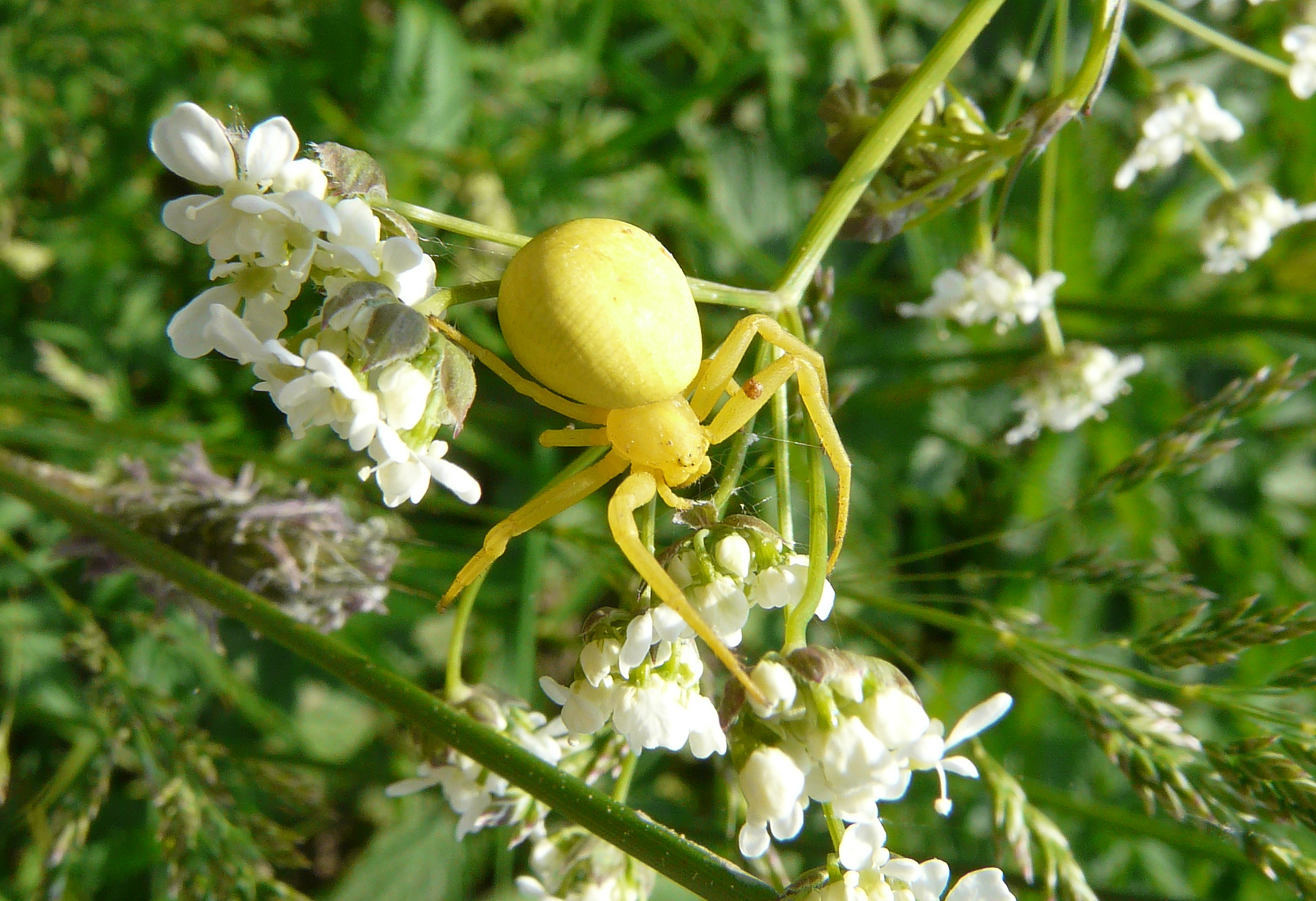
The body length of the female ranges from 7 to 10 mm, and that of the male from 3 to 5 mm. Females are capable of changing their coloration to match their surroundings and the insects they hunt. The coloration can be white, yellow, or brownish, and the change takes between 6 and 25 days. Sometimes red stripes appear on the abdomen, aiding in camouflage. Only females can change their color; males have dark front legs, a brown cephalothorax, and a yellow abdomen with a dark pattern. Juvenile flower crab spiders are usually green.
Goldenrod crab spiders do not build webs – they use silk only for quick movement. They typically ambush prey on flowers but can also be found on tree leaves. Using their hind legs to hold onto surfaces, they keep their front legs widely spread and attack prey instantly, injecting venom and digestive fluids. They can even attack venomous bees and wasps.