
Dominican Basilica in Kraków – Church of the Holy Trinity
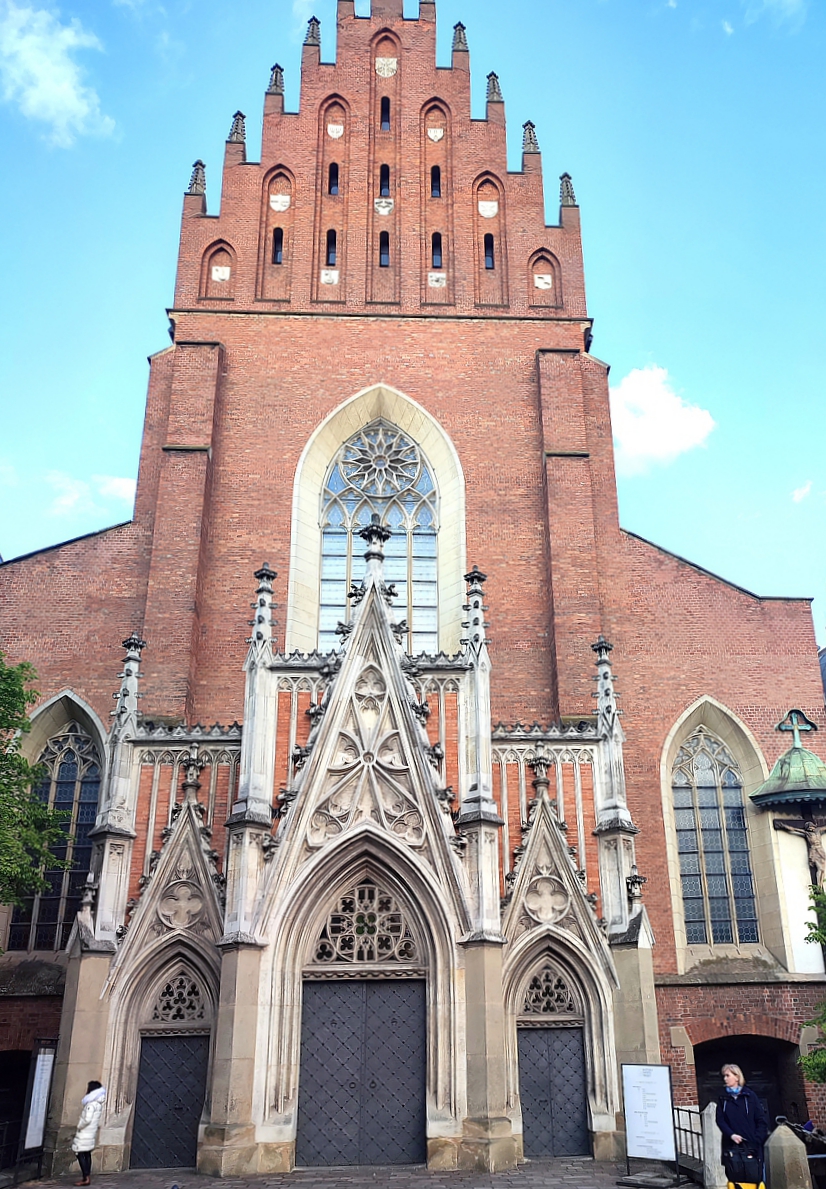
The Dominican Basilica in Kraków (Church of the Holy Trinity) is a historic Roman Catholic church located in the Old Town at 12 Stolarska Street. It serves as the sanctuary of St Hyacinth (Jacek Odrowąż), the sanctuary of Our Lady of the Rosary, and the conventual church of the Dominican Order.
History of the Basilica
The Dominicans, led by St Hyacinth, arrived in Kraków from Bologna in 1222. They were invited by Bishop Iwo Odrowąż, who entrusted them with the Church of the Holy Trinity. The church was consecrated on 12 March 1223 and has since remained one of Kraków’s most important spiritual centres.
After the Mongol invasion in 1241, construction began on a new Gothic church and monastery. Originally built as a three-aisled hall church, it was rebuilt into a basilica at the turn of the 14th and 15th centuries. Until the mid-19th century, a free-standing bell tower stood in front of the façade, but it was destroyed during the Great Fire of Kraków in 1850.
The fire almost completely devastated the interior and caused part of the vaulting to collapse. Reconstruction lasted from 1850 to 1884 under the supervision of Teofil Żebrawski. Despite serious construction difficulties, the church was rebuilt in the Neo-Gothic style and reconsecrated in 1884. The present high altar, choir stalls and confessionals date from this period.
Since 1957, the church has held the title of minor basilica. In 2016, the funeral ceremonies of film director Andrzej Wajda were held here. In 2018, a comprehensive restoration of the interior began. Today, the Dominican Basilica remains one of Kraków’s most important sacred monuments and a vibrant centre of religious and cultural life.






Architecture of the Church
The Church of the Holy Trinity is a three-aisled Gothic brick structure with stone elements, built in the characteristic Kraków pillar-buttress system. Its elongated chancel is closed with a straight wall, giving the building a monumental appearance.
The Neo-Gothic main altar was created in the second half of the 19th century and designed by Prior Mariano Pavoni. It measures 26 metres in height and 11 metres in width. In the centre is a depiction of the Holy Trinity, flanked by statues of St Peter and St Paul, with the four Evangelists placed in niches behind them.
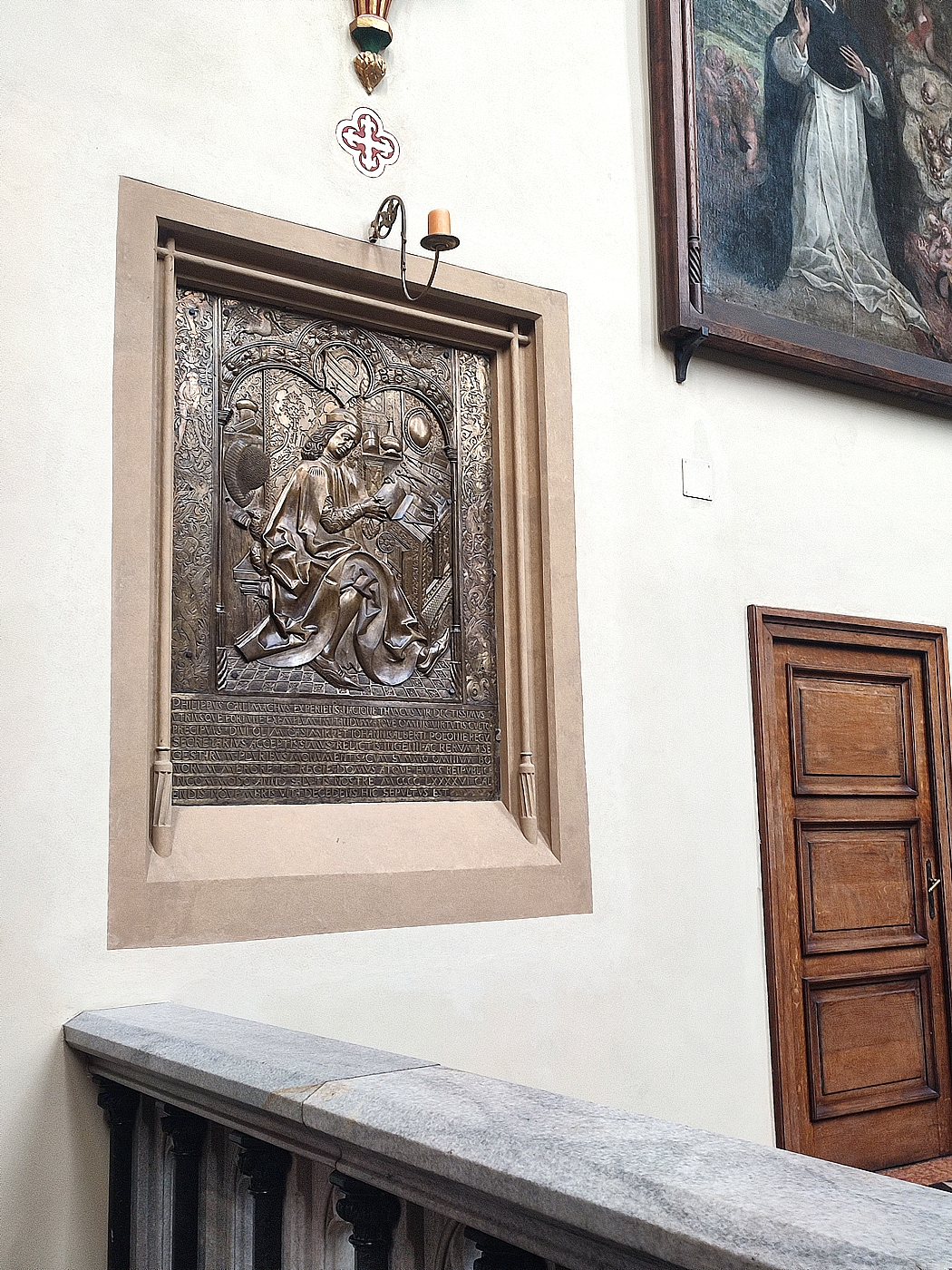
In the presbytery, beside the high altar, lies Prince Leszek the Black (d. 1288). There is also a bronze tomb slab of the humanist Filippo Buonaccorsi (Callimachus), designed by Veit Stoss.
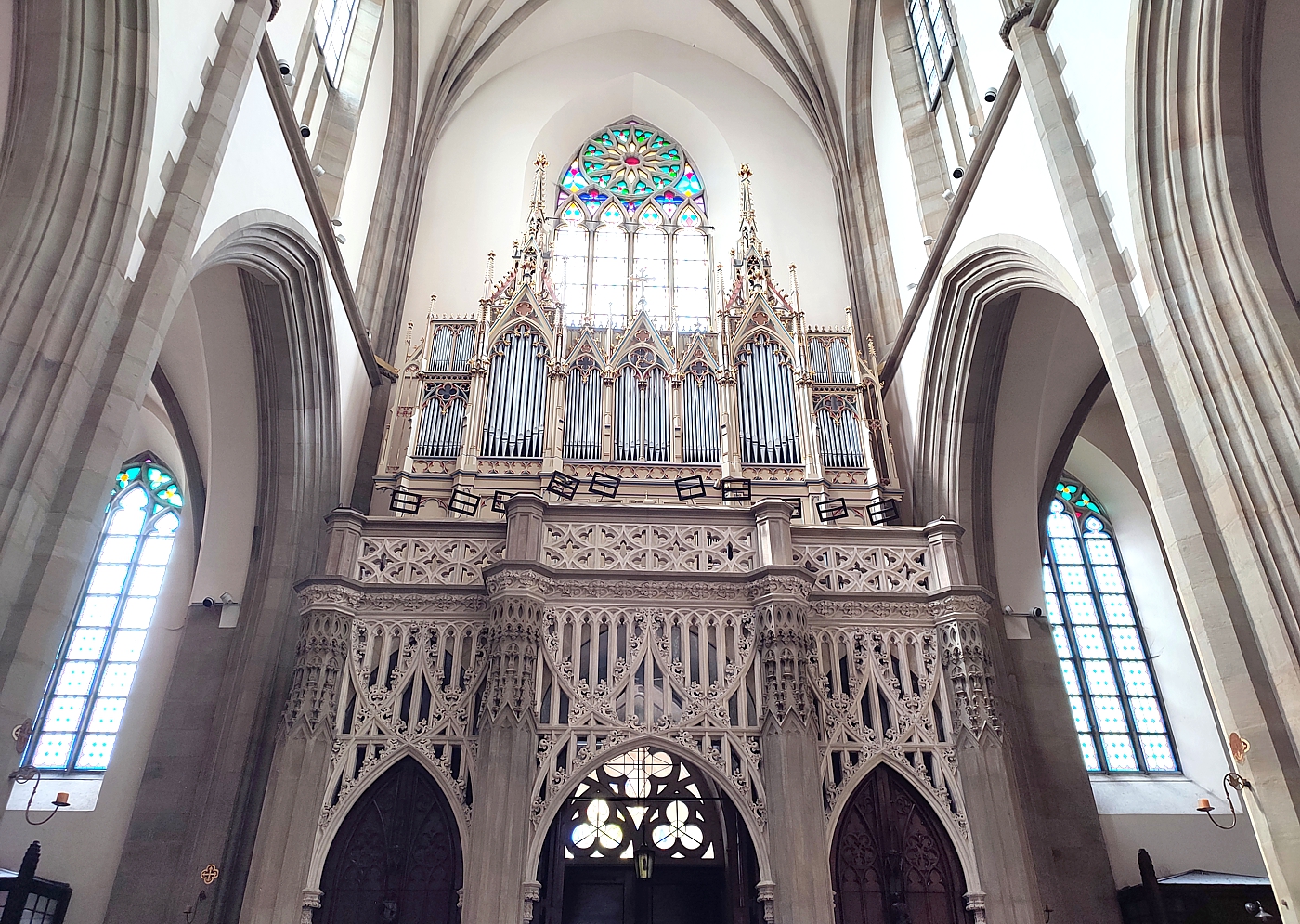
The organ, built in 1890 by the Rieger Brothers, is a valuable example of Romantic organ craftsmanship and retains its original tonal concept.
Dominican Museum
The monastery collections are presented in the Dominican Museum, opened in 2022. The exhibition includes portraits of Dominican bishops, paintings by Tomasz Dolabella (1614–1620), panels from the so-called Dominican Polyptych by the Master of the Dominican Passion, as well as works by Łukasz Orłowski and Michał Stachowicz.
Particular attention is drawn to the 13th-century Gothic alabaster sculpture of the Virgin and Child, known as the “Hyacinth Madonna”. The museum also displays the reliquary of St Hyacinth’s head, Baroque liturgical vestments, incunabula, early printed books, and manuscripts dating back to the 13th century.
Interesting Facts
According to tradition, during the Mongol invasion of 1241, St Hyacinth carried the Blessed Sacrament and a statue of the Virgin Mary out of the burning church. When he reportedly said the statue was too heavy, he heard Mary’s voice: “My son, take me with you.” The statue miraculously became light. The so-called Hyacinth Madonna is still venerated in the monastery.
The monastery cloisters are sometimes referred to as Kraków “campo santo” due to the large number of tombstones and epitaphs embedded in the walls. Walking through them feels like passing through a gallery of remembrance of former citizens, scholars and clergy.